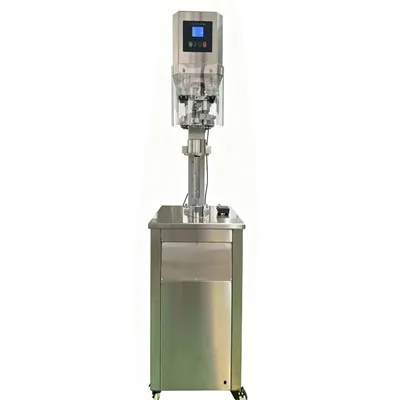
Automatic Capper

Automatic Capper
Details:
The automatic capper is an improved design based on international advanced models, with fast capping speed, high qualification rate, and easy operation. Can be used for different bottle shapes of screw caps in industries such as food, pharmaceuticals, daily chemicals, pesticides, cosmetics, etc. Four speed regulating motors are used for capping, bottle clamping, conveying, and capping. The machine has a high degree of automation, good stability, and easy adjustment. When replacing bottle shapes or caps, no spare parts are needed, only adjustments can be made (if equipped with a capping machine, automatic capping can be performed). It can be selected according to actual needs.
Send Inquiry
Description
Send Inquiry
 

Product Overview


The Automatic Capper is designed for continuous screw-cap tightening on filling and packaging lines. It combines bottle conveying, positioning, cap alignment and adjustable tightening in one automatic system.

Built with stainless steel and aluminum-profile construction, the machine is suitable for a wide range of plastic and glass containers used in food, beverages, cosmetics, pharmaceuticals, daily chemicals and agrochemical products.


Technical Specifications


Item

Specification

Cap Diameter

20–85 mm

Bottle Diameter

35–130 mm

Bottle/Sealing Height

38–300 mm

Production Capacity

1,600–2,400 bottles/hour

Power Supply

AC 220 V / 50 Hz

Installed Power

1.5 kW

Working Air Pressure

0.3–0.5 MPa

Machine Dimensions

2,000 × 800 × 1,600 mm

Net Weight

Approx. 200 kg


Capping Process


The capper operates through a continuous conveying and positioning sequence:

  1. Bottles enter the machine through the conveyor.
  2. The positioning system stabilizes each bottle before tightening.
  3. Caps are placed and aligned with the bottle neck.
  4. Adjustable capping wheels apply controlled tightening to the cap.
  5. Tightened bottles leave the machine and continue to downstream equipment.

The tightening speed and pressure can be adjusted according to the cap material, thread design and required closure condition.


Speed & Production Capacity


The standard machine is specified at 1,600–2,400 bottles/hour, while multi-head rotary capping systems can achieve substantially higher rates.

Production speed should be selected based on:

  • Required line output
  • Cap diameter and geometry
  • Bottle stability during conveying
  • Required tightening torque
  • Number of capping heads
  • Upstream and downstream equipment speed


Operation & Control


The machine uses electrically controlled drives for coordinated conveying and capping operations.

Operator-adjustable functions include:

  • Conveyor and capping speed
  • Bottle height and guide position
  • Capping head position
  • Tightening parameters
  • Format changeover settings

Optional sensors and interlocks can provide functions such as no-bottle/no-cap operation, cap-feed monitoring and machine stop protection, helping reduce mis-capping and unnecessary machine running.


Line Integration & Customization


The capper can be incorporated into an automatic packaging line after filling and before labeling, coding or secondary packaging.

Common integration options:

  • Automatic liquid or paste filling machine
  • Cap feeder, cap elevator or vibratory bowl
  • Conveyor transfer system
  • Labeling machine
  • Date/lot coding equipment
  • Bottle inspection and rejection systems

Customization can cover bottle and cap dimensions, conveyor height, positioning components, capping head configuration, electrical standards and line layout. For projects involving multiple formats or higher throughput, the capping system can be engineered around the customer's actual bottle drawings, cap samples and target production rate.


FAQ

1. Can it handle lightweight or unstable bottles?
Yes, provided the container is suitable for automatic conveying and capping. For lightweight, tall or flexible bottles, additional bottle clamps, side guides or neck-handling components can be added to prevent bottle rotation, tipping or deformation during tightening.


2. Can it be used for tamper-evident caps?
Yes. Tamper-evident applications require correct vertical positioning and controlled tightening so that the cap skirt and tamper band engage properly. Samples should be tested before finalizing the capping configuration.


3. What information is required for a technical quotation?
For an accurate configuration, we normally require bottle drawings or samples, cap drawings or samples, target bottles/hour, required capping torque, bottle material, cap material and line layout.


4. What spare parts should be kept on site?
For continuous production, it is advisable to keep commonly replaceable components such as capping wheels, belts, sensors, pneumatic fittings, bearings and electrical control components in stock. For machines with dedicated change parts, a complete set of format-specific components will also be identified in the spare-parts list.


5. What acceptance criteria should be defined before shipment?
The purchase specification should define measurable criteria such as tested production rate, acceptable capping torque range, cap positioning accuracy, bottle stability, rejection rate and continuous operating time. Factory acceptance testing uses agreed bottle and cap samples so that machine performance can be evaluated against the same conditions at installation.


6. What is the standard lead time for an Automatic Capper?
The standard lead time is 30–45 days after order confirmation and receipt of the agreed initial payment. The actual schedule is subject to final machine configuration, customization requirements and confirmation of technical specifications.


7. What payment methods are accepted?
Payment can be arranged by T/T (Telegraphic Transfer), PayPal or Western Union, depending on the order value and agreed commercial terms.


8. What warranty is provided for the Automatic Capper?
The machine is covered by a one-year warranty starting from completion of commissioning. The warranty covers manufacturing defects and failures attributable to the machine under normal operating conditions. Wear parts, consumables, damage caused by improper operation, unauthorized modifications or use outside the agreed specifications are not covered.


Hot Tags: automatic capper, China automatic capper manufacturers, suppliers, factory, goods packing machine, high speed packing machine, package supplies equipment, packing, packing machine, pouching machines

Send Inquiry
Send Inquiry